I remember sitting on my floor in a cramped San Francisco apartment, surrounded by expensive linen-bound notebooks and high-end markers that I was terrified to actually use. I felt this crushing pressure to make every page a masterpiece, convinced that learning how to keep a making journal meant producing something aesthetically perfect for a social media feed. It was exhausting, and honestly, it was the fastest way to kill my creative spark. I was treating my process like a corporate performance review instead of a sacred space to breathe, and it left me feeling more disconnected from my craft than ever before.
I’m here to tell you that we are stripping away all that performative nonsense. In this guide, I’m going to share the messy, unpolished, and deeply restorative ways I actually use my journals to bridge the gap between productivity and peace. We aren’t chasing perfection; we are chasing presence. I’ll show you how to build a practice that honors your unique rhythm, ensuring your journal becomes a sanctuary for your thoughts rather than just another item on your to-do list.
Table of Contents
Finding Stillness Through Creative Process Documentation
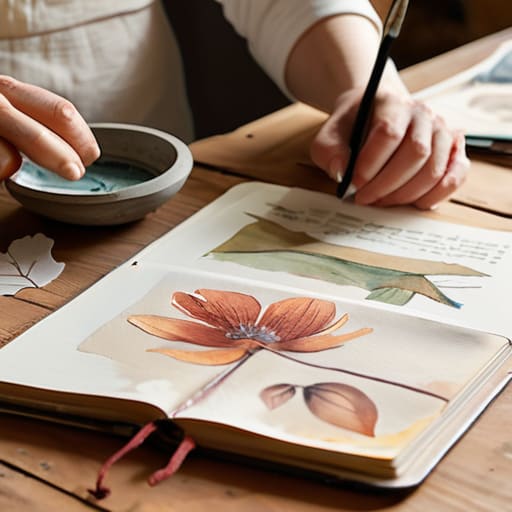
I remember back in my corporate days, I used to treat every task like a race to the finish line. It wasn’t until I picked up a paintbrush that I realized how much I was missing by rushing. When we engage in creative process documentation, we aren’t just recording steps; we are actually slowing down our nervous systems. It’s about shifting from a mindset of “get it done” to “how does this feel?” By capturing those fleeting moments of inspiration or even the frustration of a failed stitch, you create a sacred space to simply be present.
This practice is such a powerful tool for tracking creative growth over time. Instead of only celebrating the polished final product, you begin to honor the messy, beautiful middle. I’ve found that when I use my notebook to jot down how a certain texture felt under my fingers or why a specific color palette resonated with my mood, it becomes more than a log—it becomes a mirror. It allows us to look back and see not just what we made, but who we were becoming through the act of making.
Maker Notebook Ideas for a More Mindful Practice
When I first started my journey into wellness, I realized that my creative practice was often the first thing I sacrificed when life got hectic. To combat this, I started experimenting with different maker notebook ideas to turn my workspace into a sanctuary rather than just a production line. Instead of just listing tasks, try incorporating artistic reflection prompts into your daily entries. Ask yourself: “What texture did I love today?” or “Where did I feel resistance in my hands?” This shifts the focus from the final product to the sensory experience of the moment.
Another way to deepen this connection is through intentional creative process documentation. I love using my notebook to capture the “messy middle”—those sketches, color swatches, or even dried flower petals that represent a specific mood. By documenting these small, ephemeral details, you aren’t just keeping a record; you are tracking creative growth in a way that honors your evolution. It becomes a beautiful, tactile map of your soul’s movement through your craft, reminding you that every stumble is just as vital as every success.
Five Ways to Let Your Journal Become a Sanctuary for Your Craft
- Forget the pressure of perfection; treat your journal like a messy, beautiful conversation with yourself rather than a curated gallery. If a sketch goes sideways or a glue spill happens, don’t tear the page out—document it. Those “mistakes” are often where the most profound learning and the most honest parts of your creative journey live.
- Use your entries to capture the sensory details that a finished product often hides. Instead of just noting what you made, write down how the clay felt between your fingers or the specific way the sunlight hit your workspace that afternoon. It’s about anchoring your productivity in the physical sensations of the present moment.
- Incorporate “micro-reflections” to bridge the gap between doing and being. After a session, take just two minutes to jot down one thing that energized you and one thing that felt draining. This isn’t about tracking output for the sake of efficiency; it’s about listening to your internal compass so you can work with intention rather than just momentum.
- Create a “resource ritual” within your pages by taping in scraps of inspiration—a dried leaf, a textured piece of paper, or a color swatch that caught your eye. This turns your journal into a tactile mood board that feeds your soul, making the act of looking back through your notes feel like a warm, restorative hug.
- Schedule your journaling as a “buffer zone” between your making time and your life time. I used to jump straight from my studio back into emails, and it felt jarring. Now, I use five minutes of journaling to gently close the creative door, allowing me to transition from the flow state back into the world without losing that sense of inner peace.
Embracing the Journey, Not Just the Result
Let your journal be a sanctuary for the “messy middle,” where you record your frustrations and breakthroughs with the same grace you give your finished pieces.
Use your making journal as a tool for mindfulness, shifting your focus from the pressure of productivity to the simple, rhythmic joy of the creative act itself.
Remember that a journal is a living breathing record of your growth; treat every scribble and smudge as a beautiful testament to your evolving craft and your commitment to showing up for yourself.
## More Than Just a Logbook
“A making journal shouldn’t feel like another item on your to-do list; think of it instead as a soft place to land—a sacred space where you can honor the messy, beautiful evolution of your ideas and give yourself permission to simply be present in the process.”
Sophia Reynolds
Honoring Your Creative Rhythm
As we wrap up our exploration of the making journal, I hope you see it for what it truly is: more than just a collection of sketches or technical notes. It is a sacred space where you can document your breakthroughs, forgive your mistakes, and witness your own evolution. By integrating mindful prompts and intentional documentation into your workflow, you aren’t just tracking progress; you are cultivating a deeper connection to the very essence of your craft. Remember, the goal isn’t to create a perfect, museum-worthy book, but to build a living archive of your curiosity and the quiet moments of discovery that happen between the big milestones.
If there is one thing I want you to carry away from this, it’s that your creative journey deserves to be witnessed—even if that witness is just you, sitting quietly with a pen in hand. In our hyper-connected, high-speed world, choosing to slow down and honor your process is a radical act of self-care. So, grab your journal, find a comfortable corner, and let the pages hold your intentions. Trust that every scribble and every “failed” experiment is a vital part of the beautiful tapestry you are weaving. Go forth and create with intention, knowing that the magic isn’t just in the finished piece, but in the soul you pour into the making.
Frequently Asked Questions
I sometimes feel like my journal is becoming just another "to-do" list; how can I keep it feeling like a soulful retreat rather than a chore?
Oh, I have been exactly where you are. When my old corporate planner started feeling like a heavy weight, I realized I was treating my creativity like a deadline. To shift this, try the “No-Task Zone” rule. Dedicate a few pages solely to sensory details—the way the ink flows or the scent of your studio. If you find yourself listing chores, pause, take a breath, and ask: “How does my heart feel right now?”
Do I really need to document every single step, or is it okay to only capture the moments that actually resonate with me?
Oh, please don’t feel like you’re writing a technical manual! I used to think I had to document every single stitch or brushstroke to be “productive,” but that just leads to burnout. Honestly? If you try to capture everything, you lose the magic. Only document what resonates. Your journal should be a sanctuary for your soul, not a chore on your to-do list. Let the quiet moments breathe; they’re often where the real growth happens.
What should I do on those days when I feel totally uninspired and the blank page feels more intimidating than comforting?
Oh, I have been there so many times—staring at that blinding white page until it feels more like a wall than a canvas. On those days, please give yourself permission to stop “producing.” Instead of forcing inspiration, try a “low-stakes” entry. Doodling, taping in a scrap of fabric, or even just writing down one thing you smelled or felt today can bridge the gap. Honor the lull; sometimes the most productive thing you can do is simply rest.