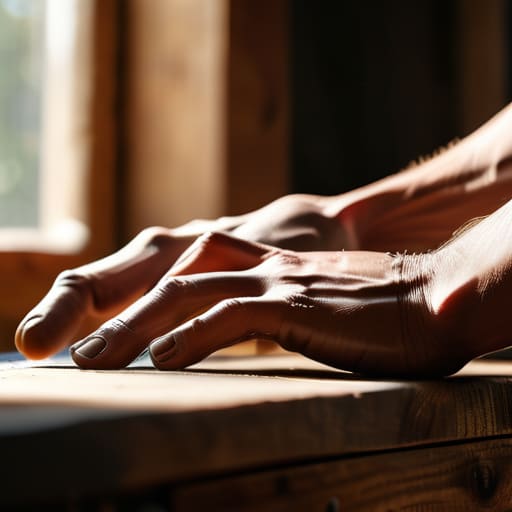
I remember sitting in my old corporate office in San Francisco, staring at a screen until my vision blurred, feeling a sharp, pulsing ache radiate from my fingertips up to my elbows. I had tried every “ergonomic” gadget on the market—expensive gel pads, wrist rests that felt like bricks, and even those fancy mechanical keyboards—but nothing actually stopped the tension. I realized then that we’ve been sold this lie that we need more stuff to stay healthy, when in reality, the most effective way to find relief is simply learning how to stretch hands and wrists with intention.
I’m not here to sell you a subscription to a wellness app or a piece of overpriced hardware. Instead, I want to share the gentle, science-backed movements that actually work when you’re caught in the mid-afternoon slump. We are going to explore a few mindful rituals that you can do right at your desk to release that built-up tightness. My promise to you is simple: no fluff, just honest, actionable stretches that honor your body and help you reclaim your focus without ever leaving your chair.
Table of Contents
- Relieving Wrist Tension From Typing Through Mindful Movement
- Essential Carpal Tunnel Prevention Exercises for Daily Calm
- Small Rituals for Greater Ease: My Favorite Ways to Unwind Your Hands
- Small Rituals, Big Impact: Bringing It All Together
- [A Moment of Connection]
- Honoring Your Body’s Rhythm
- Frequently Asked Questions
Relieving Wrist Tension From Typing Through Mindful Movement

I remember sitting at my old desk in San Francisco, staring at a mountain of spreadsheets, completely oblivious to the dull ache blooming in my forearms. It wasn’t until I felt that sharp, tingling sensation that I realized my body was trying to tell me something. We often treat our hands like mere tools for our devices, forgetting that they are intricate extensions of our nervous systems. Relieving wrist tension from typing isn’t just about physical mechanics; it’s about reintegrating awareness into our digital workflows.
Instead of waiting for the pain to become a distraction, I’ve learned to treat movement as a tiny, sacred ritual. Try incorporating some gentle finger dexterity drills into your afternoon rhythm—think of it as a way to recalibrate your focus. Slowly spreading your fingers wide and then curling them into a soft fist helps reset the tension that builds up during intense focus sessions. These moments of intentionality serve as more than just hand muscle recovery; they are a way to reclaim your presence in a world that constantly demands your output.
Essential Carpal Tunnel Prevention Exercises for Daily Calm

When we talk about long-term wellness, it isn’t just about fixing pain once it arrives; it’s about creating a proactive rhythm of care. I often tell my clients that think of these carpal tunnel prevention exercises as a way of “recalibrating” your nervous system. One of my favorite movements is the prayer stretch. Simply press your palms together in front of your chest and slowly lower them toward your waist, keeping your hands touching. It feels like a gentle invitation for your joints to find space again.
If you find yourself feeling particularly stiff after a long afternoon of meetings, I recommend incorporating some light finger dexterity drills into your breaks. Try spreading your fingers as wide as they can go, holding for a few seconds, and then making a soft, rhythmic fist. It sounds simple, I know, but these tiny micro-movements are incredibly effective for hand muscle recovery. It’s about honoring the tools you use to create and connect every single day. Remember, even a sixty-second reset can completely shift your energy from frazzled to focused.
Small Rituals for Greater Ease: My Favorite Ways to Unwind Your Hands
- Try the “Prayer Stretch” whenever you feel that familiar tightness creeping in; just press your palms together in front of your chest and slowly lower them toward your waist, letting the stretch flow through your wrists like a gentle wave.
- I love the “Finger Fan” technique for those afternoons when my typing feels heavy—simply spread your fingers as wide as they can go, hold for a heartbeat, and then make a soft, gentle fist, repeating this to wake up those tiny muscles.
- Don’t forget about your forearms! Take your right hand and gently pull your left palm toward you, keeping your elbow straight, and breathe into that sensation; it’s such a beautiful way to release the tension we carry from a long day of clicking and scrolling.
- Incorporate some “Thumb Circles” into your breaks; rotate your thumbs in slow, mindful circles to counteract the repetitive gripping motion we often do without even realizing it.
- My little secret for a quick reset is the “Reverse Stretch”—place your hands on your desk with your fingers pointing back toward your body and very slowly lean back, feeling a soothing opening through the underside of your wrists.
Small Rituals, Big Impact: Bringing It All Together
Listen to your body’s subtle whispers; that slight ache in your wrist is often a gentle nudge to pause, breathe, and reconnect with your physical self.
Consistency over intensity is the secret—integrating tiny, mindful stretches into your daily flow is far more transformative than a single, rushed workout.
View these movements not as chores on a to-do list, but as small acts of kindness toward the hands that allow you to create, work, and connect with the world.
[A Moment of Connection]
“Think of these stretches not as another task on your to-do list, but as a gentle homecoming to your body—a way to whisper ‘thank you’ to the hands that work so tirelessly for you every single day.”
Sophia Reynolds
Honoring Your Body’s Rhythm

As we wrap up our exploration of wrist health, I want you to remember that these stretches aren’t just another item on your to-do list; they are vital moments of connection. From the mindful movements we used to release typing tension to those essential carpal tunnel prevention exercises, each movement serves as a way to reclaim your physical autonomy in a digital world. By integrating these small, intentional pauses into your workflow, you aren’t just preventing injury—you are actively choosing to listen to the subtle signals your body sends you before they turn into loud cries for help. Remember, consistency is always more powerful than intensity when it comes to long-term wellness.
I know how easy it is to get swept up in the relentless pace of our modern lives, feeling like every second must be optimized for output. But I’ve learned through my own journey—and through years of studying positive psychology—that true productivity is born from a place of well-being, not depletion. Treat these stretches as a sacred ritual of self-care rather than a chore. When you give your hands and wrists the grace to rest and reset, you are actually fueling your ability to show up fully for the things that truly matter. So, take one more deep breath, roll your shoulders back, and move forward with gentleness and intention.
Frequently Asked Questions
I’ve been feeling a sharp twinge when I use my mouse; how do I know if I should keep stretching or if it's time to actually see a professional?
Oh, I hear you, and I want you to listen closely to that sensation. While I love a good mindful stretch, there’s a fine line between “tension release” and “injury warning.” If that twinge turns into persistent numbness, tingling, or a sharp pain that wakes you up at night, please, stop stretching and book an appointment with a professional. Your body is communicating with you; sometimes, the most productive thing you can do is seek expert care.
Is there a specific time of day when these stretches are most effective, or should I just sprinkle them in whenever I feel tension building?
That’s such a thoughtful question! Honestly, while there’s no magic hour, I’ve found that “micro-breaks” are absolute game-changers. I used to try to save everything for a big evening session, but my body would already be in pain by 3 PM. I’ve learned to sprinkle them in whenever I feel that subtle tightness creeping in. Think of it as preventative maintenance—don’t wait for the storm to arrive; just enjoy the gentle breeze of movement throughout your day.
Can I incorporate these movements into my workflow without it feeling like a huge disruption to my focus and productivity?
Oh, I hear you! That “flow state” is sacred, and the last thing I want is for you to feel like you’re breaking your stride. Think of these movements not as interruptions, but as “micro-recharges.” I like to tie them to existing transitions—like right after you hit ‘send’ on a big email or while a file is downloading. It’s about weaving wellness into the seams of your work, rather than carving out huge chunks of time.