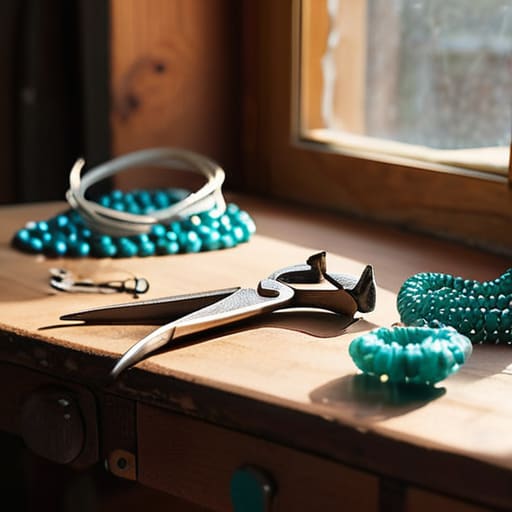
I remember sitting on my living room floor three years ago, surrounded by a chaotic mountain of tangled copper wire and mismatched beads, feeling completely overwhelmed by the sheer mess of it all. I had this romanticized idea that crafting would be this seamless, meditative escape, but instead, I was just frustrated and covered in metal dust. The truth is, most people think you need a professional studio or a massive budget to start, but learning how to make jewellery at home isn’t about having the fanciest tools; it’s about finding a rhythm that works for your unique space and energy.
In this guide, I’m stripping away the fluff and the intimidating jargon to give you a realistic roadmap for your creative journey. We aren’t just going to talk about pliers and jump rings; I’ll be sharing my favorite ways to use crafting as a form of mindful movement to decompress after a long workday. You can expect honest, step-by-step advice on sourcing quality materials without breaking the bank and, most importantly, how to cultivate a workspace that feels like a sanctuary rather than a cluttered chore.
Table of Contents
- Step-by-Step Instructions
- Curating Your Sanctuary With Essential Jewellery Making Tools
- Finding Your Rhythm Through Beginner Beadwork Techniques
- The Heartbeat of Your Craft: 5 Soulful Tips for the Home Maker
- Bringing the Harmony Home: My Final Thoughts for Your Creative Journey
- The Soul in the Small Details
- Embracing Your Creative Journey
- Frequently Asked Questions
Guide Overview
Tools & Supplies
- Needle-nose pliers for gripping and bending wire
- Wire cutters for trimming components
- Beading mat to prevent rolling
- Glass or gemstone beads (1-2 strands)
- Jewelry wire or memory wire (1 spool)
- Lobster clasps (5-10 pieces)
- Jump rings (1 pack)
Step-by-Step Instructions
- 1. Before we touch a single bead, we need to create a sacred space for our creativity. Clear off a dedicated corner of your table, perhaps near a window with some natural light, and gather your essential toolkit: needle-nose pliers, wire cutters, a bead mat to keep things from rolling away, and your chosen materials. I always find that setting the stage physically helps my mind transition from the frantic pace of the workday into a more flow-like state.
- 2. Now, let’s start with the foundation of your piece by selecting your stringing material. Depending on whether you’re making a delicate necklace or a sturdy bracelet, you might choose silk thread, nylon cord, or even high-quality elastic. As you run your fingers through the textures, try to really feel the weight of the materials; this tactile connection is a wonderful way to ground yourself in the present moment.
- 3. Once your base is ready, it’s time to begin the rhythmic process of pattern making. This is where the magic happens—you’ll thread your beads one by one, perhaps alternating colors or textures to create a visual story. Don’t feel pressured to follow a rigid design; instead, let your intuition lead the way and allow the pattern to unfold organically as you work.
- 4. After you’ve reached your desired length, we need to secure the ends so your creation lasts a lifetime. If you’re using wire, this is where you’ll use your pliers to create small, elegant loops or to attach a beautiful clasp. I remember a time during a particularly stressful quarter at my old corporate job when I spent an entire evening just perfecting these tiny loops, and I realized that the precision required was actually a form of moving meditation.
- 5. If you are working with elastic cord, you’ll want to tie a surgeon’s knot to ensure everything stays secure. Apply a tiny drop of jewelry glue to the knot and give it a moment to set before you move on. It might seem like a small, technical detail, but attention to these finishing touches is what transforms a simple hobby into a true act of craftsmanship.
- 6. Finally, take a moment to step back and look at what you’ve created with your own two hands. Hold your piece up to the light, admire the colors, and most importantly, acknowledge the effort you put into this process. The goal isn’t just to walk away with a piece of jewelry, but to carry the sense of accomplishment and calm you cultivated while making it.
Curating Your Sanctuary With Essential Jewellery Making Tools
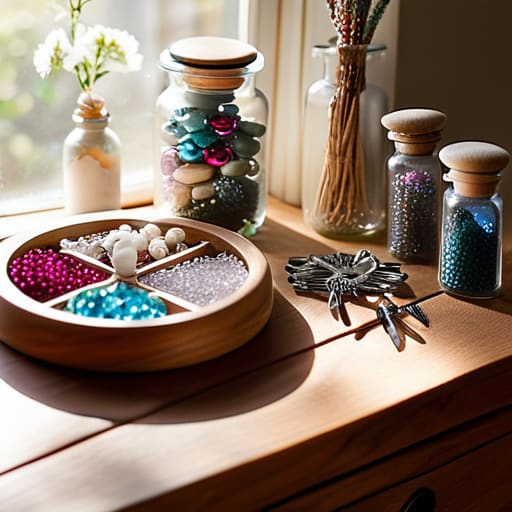
Before we get our hands messy with beads and wire, I want to talk about something that often gets overlooked: your environment. When I first started my journey into crafting, I used to spread everything across my kitchen table, feeling scattered and rushed. I quickly learned that your physical space dictates your mental state. To truly enjoy the process, I recommend setting up a dedicated nook—even if it’s just a small corner of a desk—that feels like a sanctuary. Having your jewelry making supplies for beginners organized in pretty glass jars or divided trays isn’t just about aesthetics; it’s about reducing the cognitive load so you can stay present in the flow of creation.
As you begin gathering your essential jewellery making tools, remember that quality beats quantity every single time. You don’t need a massive kit to start making handmade necklaces and bracelets, but investing in one reliable pair of pliers will save you so much frustration. For instance, learning how to use needle nose pliers with precision allows you to manipulate small jump rings without feeling like you’re fighting the metal. Think of these tools as extensions of your own hands—the better they feel, the more peaceful your creative practice will become.
Finding Your Rhythm Through Beginner Beadwork Techniques
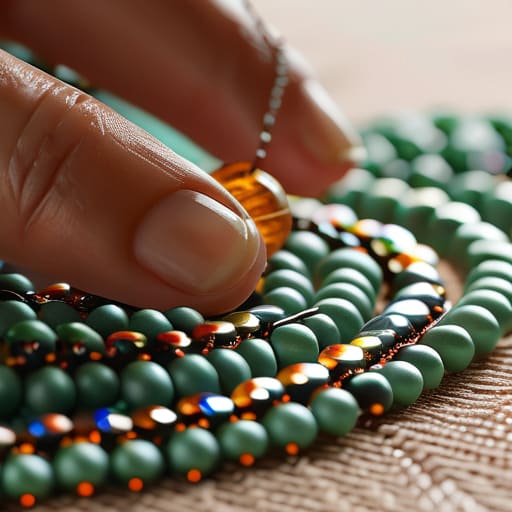
As you begin experimenting with different beginner beadwork techniques, I want you to remember that this isn’t a race to the finish line. I remember when I first started my own creative journey; I was so obsessed with perfection that I’d get frustrated if a single bead sat crookedly. But I’ve learned that the magic lies in the flow. When you’re working on making handmade necklaces and bracelets, try to view each bead as a tiny moment of mindfulness. If you feel your tension rising, simply set the piece down, take a deep breath, and reconnect with the tactile sensation of the materials.
To keep that sense of calm, it helps to master the basics of your essential jewellery making tools before diving into complex patterns. For instance, learning the gentle precision of how to use needle nose pliers can transform a moment of frustration into one of effortless control. Once you feel comfortable with the mechanics, you’ll find that the technical side fades into the background, allowing your intuition to take the lead. This is where the true joy of creation begins.
The Heartbeat of Your Craft: 5 Soulful Tips for the Home Maker
- Embrace the “Flow State” by setting boundaries with your time. I remember during my corporate days, I used to try and squeeze creativity into ten-minute breaks, but jewelry making requires a different kind of presence. Try to carve out at least thirty minutes where your phone is in another room; it’s not just about the beads, it’s about giving your brain permission to enter that beautiful, meditative zone.
- Don’t fear the “Beautiful Mess.” When I first started experimenting with wire wrapping in my tiny apartment, I felt so overwhelmed by the scattered trays of findings and loose stones. My advice? Let your workspace be a living reflection of your process. A little bit of creative chaos can actually lower your cortisol levels by removing the pressure of perfectionism.
- Listen to your body’s subtle cues. This is something I wish I’d known sooner—jewelry making involves a lot of fine motor skills and repetitive motions. If you feel a tightness in your shoulders or a strain in your eyes, that is your body asking for a mindful pause. A quick two-minute stretching sequence or a deep breathing exercise can be the difference between a relaxing evening and a neck ache.
- Source with intention, not just for quantity. It can be so tempting to buy those massive, cheap bulk packs online, but I’ve found that my connection to the craft grows when I choose pieces that actually resonate with me. Whether it’s a single, unique semi-precious stone or a vintage clasp you found at a local market, choosing items with “soul” makes the assembly process feel much more meaningful.
- Document your journey, even the “failures.” I always tell my clients that growth happens in the messy middle. Keep a small notebook nearby to jot down what worked and what didn’t—not as a strict technical log, but as a way to honor your evolution. Looking back at a “failed” necklace from three months ago is one of the most rewarding ways to see how much your intuition has actually grown.
Bringing the Harmony Home: My Final Thoughts for Your Creative Journey
Remember that the beauty of handmade jewelry lies in the intention you pour into it; treat each bead and wire as an opportunity to practice mindfulness and reconnect with your inner calm.
Don’t feel pressured to master every complex technique overnight—embrace the “slow craft” movement by celebrating small wins and allowing your creativity to unfold at its own natural pace.
Curating a dedicated, peaceful space for your craft is just as important as the tools themselves, so ensure your creative sanctuary remains a place that nourishes your soul rather than adding to your mental clutter.
The Soul in the Small Details
“Making jewellery at home isn’t just about the beads you string or the wire you bend; it’s about those quiet, intentional moments where you step away from the digital noise to reconnect with your own creativity. When we craft with our hands, we aren’t just making an accessory—we’re weaving a little piece of our own stillness into something beautiful.”
Sophia Reynolds
Embracing Your Creative Journey
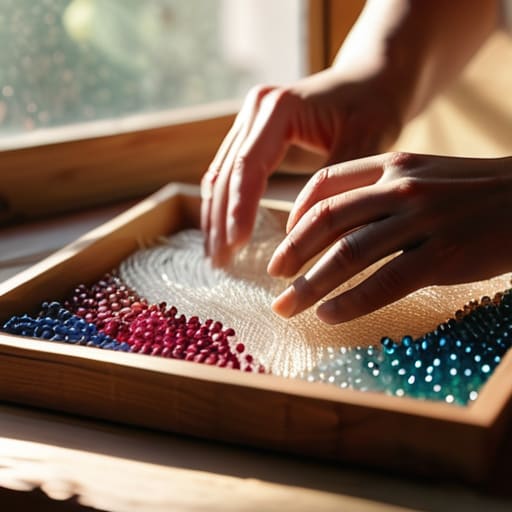
As we bring this guide to a close, I want you to take a moment to look back at how far you’ve come. We’ve moved from setting up your dedicated sanctuary to mastering those foundational beadwork rhythms that turn raw materials into something meaningful. Remember, the goal wasn’t just to follow a set of instructions, but to cultivate a space where you can truly connect with your hands and heart. Whether you’re working with intricate wire or simple, colorful beads, the most important thing you’ve built is a sustainable creative practice that honors both your patience and your unique vision.
As you move forward from this guide, please remember that your jewelry doesn’t have to be perfect to be profound. In my own journey from the high-pressure corporate world to the stillness of my studio, I’ve learned that the most beautiful pieces often carry the tiny, imperfect marks of the person who made them. Let your jewelry making be a form of moving meditation—a way to reclaim your time in a world that always demands more. So, take a deep breath, pick up your tools, and simply allow yourself to create without judgment. You aren’t just making accessories; you are crafting pieces of your own peace.
Frequently Asked Questions
How can I manage the clutter of all these tiny beads and tools without feeling overwhelmed in my living space?
I completely hear you—I remember when my first studio apartment in California felt less like a sanctuary and more like a bead warehouse! To keep the overwhelm at bay, I swear by the “micro-zone” method. Instead of seeing a mountain of supplies, use small, clear containers to categorize by color or type. It turns the chaos into a visual palette. Remember, your space should breathe just as much as you do; keep only what you’re using active.
Is there a way to tell if the metals I'm buying are high enough quality to avoid irritating my skin?
That is such a thoughtful question, and honestly, it’s one I wish someone had asked me back when I first started my wellness journey! Skin sensitivity is so real. To keep your sanctuary truly restorative, look for labels like “nickel-free,” “hypoallergenic,” or “medical-grade.” I personally swear by sterling silver or gold-filled metals. If you’re unsure, a quick way to check is to see if the piece tarnishes instantly—quality metals tend to hold their integrity much longer.
What should I do if I feel myself getting frustrated or impatient when a delicate piece isn't coming together quite right?
Oh, I have been there more times than I can count! When that tiny clasp just won’t behave, my heart rate starts to climb. In those moments, I remind myself: the jewelry is secondary to the peace I’m cultivating. Step away from the bench. Take three deep, intentional breaths, or maybe even a quick stretch. When we force creativity through frustration, we lose the magic. Come back when your hands feel steady and your spirit feels calm.