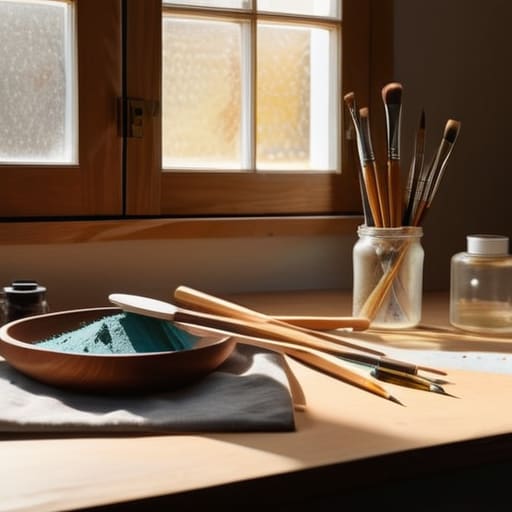
I still remember sitting on my studio floor in Portland, surrounded by half-finished canvases and a mountain of unpaid invoices, feeling like my brain was nothing but static. The air felt heavy, and even the smell of linseed oil, which used to excite me, suddenly felt suffocating. I had fallen into the trap of believing that if I just worked harder and slept less, I’d finally “make it,” but all I was really doing was eroding my soul. If you’re currently staring at your screen wondering how to avoid burnout from a creative business without losing your edge, please know that I have been exactly where you are, feeling that hollow ache of creative exhaustion.
I’m not here to sell you a $500 productivity planner or a complicated 12-step morning ritual that takes two hours to complete. Instead, I want to share the messy, evidence-based, and deeply human strategies I’ve gathered from both my years in corporate wellness and my own journey as a creator. We are going to explore how to build sustainable rhythms that honor your talent while protecting your peace. Let’s learn how to work smart, so you can keep creating without losing yourself in the process.
Table of Contents
- Recognizing the Subtle Shifts in Your Creative Entrepreneur Mental Health
- How to Avoid Burnout From a Creative Business Before It Starts
- Five Gentle Anchors to Keep You Steady When the Creative Storm Hits
- Protecting Your Creative Flame: My Top Three Essentials
- The Creative Paradox
- Finding Your Rhythm Again
- Frequently Asked Questions
Recognizing the Subtle Shifts in Your Creative Entrepreneur Mental Health

Burnout rarely arrives like a sudden thunderstorm; more often, it creeps in like a slow, morning fog, making everything feel slightly muted and heavy. When I was working as a corporate wellness consultant, I noticed that many people missed the early warnings because they were so focused on the “hustle.” For those of us running our own shows, the signs of creative exhaustion often manifest as a strange, hollow feeling when you sit down to work. You might find yourself staring at a blank screen for an hour, or suddenly feeling an intense irritability toward the very projects that used to make your heart race with excitement.
It’s particularly tricky when your identity is so intertwined with your output. I’ve learned that one of the hardest parts of creative entrepreneur mental health is the blurring of lines between who you are and what you produce. You might start feeling guilty for resting, thinking that a moment of stillness is a moment of lost revenue. But please, listen to that subtle shift in your energy. If your passion starts feeling like a chore, it’s not a sign of failure—it’s your soul’s way of asking for a little more grace.
How to Avoid Burnout From a Creative Business Before It Starts

The best way to protect your flame is to build a fireplace around it before the sparks fly. For many of us, the biggest trap is the blurred line between our identity and our output. I remember during my corporate consulting days, I saw so many brilliant minds crash because they hadn’t mastered the art of separating passion from profit. When your hobby becomes your paycheck, it’s easy to feel like you’re “always on.” To prevent this, you have to treat your energy like a finite resource. Start by managing your creative workload with intention—don’t just schedule meetings; schedule “white space” where nothing is expected of you.
I also swear by the practice of proactive boundary-setting. It sounds unromantic, but setting boundaries as a freelancer is actually the highest form of self-care. Whether it’s a hard “no” to a client who drains your spirit or a digital sunset where your phone goes in a drawer, these small acts of discipline create the safety net you need. By establishing these guardrails early, you aren’t just working harder; you’re ensuring you have the longevity to keep creating for years to come.
Five Gentle Anchors to Keep You Steady When the Creative Storm Hits
- Build a “Sacred Buffer” into your calendar. When I was consulting in the corporate world, I saw so many high-achievers skip lunch to power through, only to crash by 3 PM. In your creative business, don’t just schedule meetings; schedule “white space.” This is time where nothing is planned—no emails, no sketching, just breathing. It’s in these quiet gaps that your best ideas actually find the room to grow.
- Curate your “Digital Sunset.” Our brains weren’t designed to be constantly stimulated by the blue light of notifications and the endless scroll of comparison. I started implementing a strict digital sunset at 8 PM, and it changed my life. Try setting a time when the laptop closes and the phone goes into another room. This allows your nervous system to actually transition from “doing” mode to “being” mode.
- Reconnect with “Low-Stakes Creativity.” One of the biggest traps for entrepreneurs is when every creative act becomes a transaction. If you only paint when it’s for a client, you’ll lose the joy of it. Find a hobby that has absolutely zero ROI—maybe it’s gardening, pottery, or even just doodling in a notebook—where the only goal is the pure, unadulterated pleasure of making something just for you.
- Audit your “Energy Leaks.” We often talk about time management, but I’m much more interested in energy management. Take a look at your weekly tasks and ask yourself: “Which of these leaves me feeling vibrantly alive, and which of these feels like it’s slowly draining my battery?” It’s okay to outsource, automate, or simply say “not right now” to the tasks that act as emotional vampires.
- Practice the “Micro-Rest” Technique. You don’t always need a week-long retreat in Bali to reset. Sometimes, the most profound healing happens in sixty seconds. I love the “physiological sigh”—two quick inhales through the nose followed by a long, slow exhale through the mouth. It’s a tiny, evidence-based way to signal to your brain that you are safe and it’s okay to let go of that tension for a moment.
Protecting Your Creative Flame: My Top Three Essentials
Listen to the whispers before they become screams; pay attention to those tiny, subtle shifts in your energy or mood, because your body often knows you’re heading toward burnout long before your mind is willing to admit it.
Build “intentional pauses” into your business model rather than treating rest as a reward for finishing your to-do list; true productivity isn’t about constant motion, it’s about finding a sustainable rhythm that honors your need for stillness.
Separate your worth from your output by creating sacred boundaries between your creative identity and your professional results, ensuring that even on the days when the “spark” feels dim, your sense of self remains bright and intact.
The Creative Paradox
“We often mistake constant movement for progress, but in a creative business, your most productive tool isn’t your laptop or your planner—it’s your capacity to rest. You cannot pour from an empty well, and you certainly cannot create magic from a soul that is running on fumes.”
Sophia Reynolds
Finding Your Rhythm Again

As we wrap up this conversation, I want you to take a moment to look back at how far you’ve come. We’ve talked about the importance of catching those tiny, quiet signals from your body before they turn into a roar, and how setting intentional boundaries isn’t just a “nice-to-have”—it is the very foundation of a sustainable business. Remember, preventing burnout isn’t about a single grand gesture or a week-long retreat; it’s about the small, daily choices you make to honor your capacity. Whether it’s scheduling a non-negotiable walk in the park or finally saying “no” to a project that drains your spirit, these actions are your lifelines to longevity.
If you’re feeling overwhelmed right now, please hear me when I say: it is okay to slow down. Your creativity is a finite, precious resource, not an infinite well that you are obligated to pump dry for the sake of productivity. I remember a time in my corporate days when I thought pushing harder was the only way to succeed, only to realize that the most brilliant breakthroughs actually happened when I finally allowed myself to just be. So, take a deep breath, trust your intuition, and remember that you are the heartbeat of your business. When you nourish yourself, your creativity will flourish in ways you never thought possible.
Frequently Asked Questions
How can I distinguish between a natural creative slump and actual, deep-seated burnout?
Think of a slump like a rainy afternoon—it’s a temporary dip in mood where you feel uninspired, but a good night’s sleep or a walk in the woods usually brings the color back. Burnout, however, feels much heavier. It’s not just a lack of ideas; it’s a profound sense of depletion, cynicism, and physical exhaustion that doesn’t lift with rest. If you feel like you’re running on empty even after a weekend off, your soul is likely asking for something deeper than just a break.
Is it possible to set firm boundaries with clients without feeling like I'm losing business opportunities?
Oh, I hear you so loudly on this! I remember feeling that exact same “scarcity panic” during my corporate years. But here’s the truth: setting boundaries isn’t about pushing people away; it’s about teaching them how to respect your space. When you’re clear about your availability, you actually attract higher-quality clients who value your expertise. Think of it as curating your business rather than shrinking it. You aren’t losing opportunities; you’re making room for the right ones.
What are some small, realistic ways to incorporate mindfulness into a high-pressure workday when I feel like I don't have a spare second?
I hear you, and I’ve been there—staring at a mounting to-do list while feeling like there’s zero room to even blink. When things feel frantic, don’t aim for a twenty-minute meditation; aim for “micro-moments.” Try the “Sensory Reset”: stop for just thirty seconds and name three things you can see and two things you can hear. It anchors you back to the present. Even just one conscious, deep breath between meetings can shift your entire nervous system.