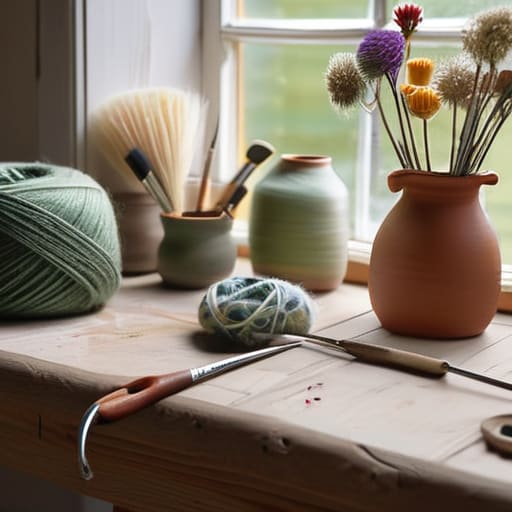
I still remember sitting on my living room floor three years ago, surrounded by a literal mountain of half-finished projects—knitting needles tangled in embroidery floss, and dried acrylic paint staining my favorite rug. I felt completely paralyzed, staring at the beautiful mess and wondering if I had simply lost my ability to focus. We often hear that the secret to creativity is “monotasking” or that we need a dedicated, expensive studio for every single hobby to stay organized, but honestly? That’s just unrealistic noise. The truth is, learning how to manage several crafts at once isn’t about buying more bins or forcing yourself into a rigid, joyless schedule; it’s about finding a way to let your curiosities coexist without them consuming your mental peace.
In this post, I’m stripping away the complicated productivity hacks and getting down to what actually works for a multi-passionate soul. I want to share the gentle, evidence-based systems I’ve developed to help you navigate your creative chaos while protecting your energy. We’re going to explore how to build a flow that honors your need for variety without the overwhelming burnout.
Table of Contents
- Finding Harmony Through a Gentle Hobby Rotation Schedule
- Managing Creative Energy Without Losing Your Inner Peace
- Small Shifts for a Smoother Creative Flow
- Embracing the Rhythm of Your Creative Flow
- The Rhythm of the Creative Soul
- Embracing the Beautiful Mess of Creative Multiplicity
- Frequently Asked Questions
Finding Harmony Through a Gentle Hobby Rotation Schedule
I remember back when I was working those high-pressure corporate roles in San Francisco, I used to come home and try to tackle every single creative project I had in one night. I’d attempt knitting, then pivot to watercolor, and end up staring at a mess of supplies feeling completely overwhelmed. That’s when I realized that true productivity isn’t about doing everything at once; it’s about managing creative energy with intention. Instead of treating your hobbies like a frantic to-do list, I’ve found so much peace in implementing a gentle hobby rotation schedule.
By designating specific days or even just specific “mood windows” for certain crafts, you give yourself permission to dive deep without the guilt of neglecting your other passions. This approach is a game-changer for creative burnout prevention, as it allows your brain to fully inhabit one creative headspace at a time. When you aren’t constantly switching gears, you actually find a much more natural, rhythmic flow. It turns your creative time from a chaotic scramble into a restorative practice that nourishes your soul rather than draining it.
Managing Creative Energy Without Losing Your Inner Peace
I remember a time during my corporate days when I’d try to tackle every single personal project at once—knitting a sweater, painting a landscape, and learning pottery—all in the same week. I thought I was being “productive,” but I ended up feeling completely drained. I learned the hard way that managing creative energy isn’t about how many things you can finish, but about how you nurture the spark that started them in the first place. When we push too hard, we risk hitting a wall of exhaustion rather than finding a flow state.
To stay inspired without feeling overwhelmed, I’ve found that creative burnout prevention is deeply tied to how we treat our physical space. It’s so much harder to feel peaceful when you’re staring at a mountain of unfinished projects and tangled yarn. Implementing simple craft room organization systems allows you to tuck away the projects that aren’t currently “active,” giving your mind permission to focus entirely on the one you’ve chosen for the day. By clearing the visual noise, you create a sanctuary where your creativity can actually breathe.
Small Shifts for a Smoother Creative Flow
- Create “micro-stations” for your different passions. I remember back when I was transitioning from corporate life, my desk was a disaster zone of planners and wellness journals. Now, I keep my knitting tucked in a beautiful basket by my reading chair and my watercolors in a dedicated tray. Having a designated “home” for each craft prevents that overwhelming feeling of a messy workspace and makes it so much easier to transition between them without the mental friction.
- Embrace the “low-stakes” project. Sometimes, we feel this immense pressure to always be working on our “masterpiece,” but that’s a one-way ticket to burnout. I love keeping a “tiny project” on hand—something like a simple crochet swatch or a basic sketching exercise—that requires almost zero cognitive load. It’s perfect for those evenings when your brain is tired from work but your hands still crave that tactile connection.
- Audit your sensory inputs. This is a little quirk of mine, but I’ve realized that different crafts demand different “vibes.” If I’m doing something intricate like embroidery, I need soft, ambient lo-fi beats to help me focus. If I’m working on something more expansive like pottery or large-scale painting, I might want an upbeat podcast to keep my energy high. Matching your auditory environment to your creative task can actually help your brain switch gears more naturally.
- Set “gentle boundaries” with your progress. It’s so easy to fall into the trap of comparing your unfinished knitting project to your half-done ceramic piece and feeling like you’re failing at both. Instead of measuring success by how much you finish, try measuring it by how much joy the process brought you. If a project sits untouched for two weeks, let it breathe. It’s not a failure; it’s just waiting for its moment.
- Use a “Transition Ritual” to close one chapter and start another. When I switch from a high-focus craft to something more relaxing, I find it helpful to physically clear my space—even if it’s just wiping down a table or putting away one specific tool. This tiny act signals to your nervous system that one mode of being is ending and another is beginning, helping you stay present in whatever you’re doing right now.
Embracing the Rhythm of Your Creative Flow
Treat your crafts like a seasonal garden rather than a race; allow yourself the grace to rotate your focus based on your current energy levels rather than a rigid to-do list.
Protect your mental space by setting small, intentional boundaries for each project, ensuring that one hobby doesn’t become a source of stress instead of a sanctuary.
Remember that productivity isn’t about how many finished pieces you produce, but about how much joy and presence you bring to the process of making.
The Rhythm of the Creative Soul
“Managing multiple passions isn’t about mastering the art of multitasking; it’s about mastering the art of presence. When we stop treating our crafts like items on a checklist and start seeing them as different ways to breathe, we find that our creativity doesn’t compete for our time—it nourishes our spirit.”
Sophia Reynolds
Embracing the Beautiful Mess of Creative Multiplicity
As we wrap up this journey of navigating the creative whirlwind, I want you to take a moment to look back at how far you’ve come. We’ve talked about the importance of a gentle rotation schedule to prevent burnout, and how protecting your energy is just as vital as the crafts themselves. Remember, managing multiple passions isn’t about achieving a state of flawless organization; it’s about creating a sustainable ecosystem where your knitting, painting, or woodworking can all coexist without stealing your peace. By setting boundaries and honoring your natural rhythms, you turn what could be overwhelming chaos into a harmonious dance of creativity.
At the end of the day, please don’t let the pursuit of “productivity” strip the joy from your hands. I remember back when I was working those high-stress corporate roles in California, I thought if I wasn’t finishing a project, I was failing. But I’ve learned that the magic often happens in the unstructured moments—the slow afternoons spent just playing with colors or textures without a deadline looming. So, go ahead and dive into your next project, juggle those beautiful threads, and remember that your worth is never tied to your output. Live deeply, create wildly, and always leave room to breathe.
Frequently Asked Questions
How do I know when I’m actually burning out versus just being momentarily uninspired by a specific project?
That is such a profound question, and honestly, one I struggled with during my corporate years. Here’s the litmus test: uninspired feels like a “fog”—you’re bored with the project, but the idea of picking up your tools still feels exciting. Burnout, however, feels like “emptiness.” It’s a deep, physical exhaustion where even the things you love feel heavy or meaningless. If your soul feels depleted, not just your creativity, it’s time to rest.
Is it better to set aside specific days for each craft, or should I just follow my mood whenever the creative spark hits?
Honestly, it’s a bit of a dance between structure and spontaneity. If you’re feeling overwhelmed, setting specific days provides a much-needed mental container that prevents burnout. But, if you lean too hard into a rigid schedule, you might accidentally stifle that magic, fleeting spark. I’ve found that a “hybrid approach” works wonders: have a loose framework to keep you grounded, but leave enough breathing room to honor your intuition when inspiration calls.
How can I keep my workspace from becoming a chaotic mess when I'm switching between different types of supplies?
I used to think a messy desk was just the “price of creativity,” but I learned the hard way that visual clutter often leads to mental clutter. I swear by the “Zone Method.” Instead of one giant pile, try using clear, stackable bins for each craft. When you switch from knitting to watercolor, you aren’t just moving supplies; you’re physically closing one chapter and opening another. It keeps your headspace just as clear as your table.