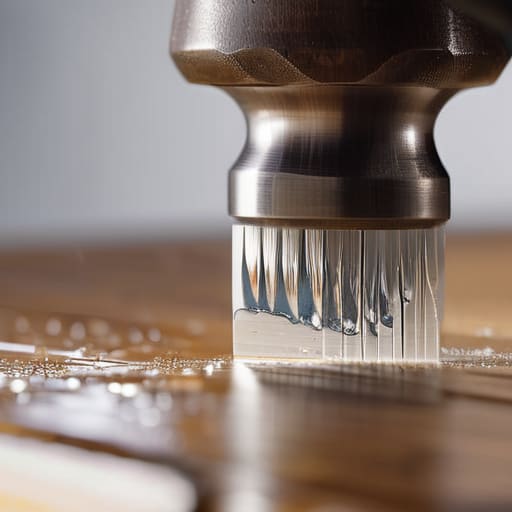
I remember sitting on my workshop floor last spring, staring at a piece of walnut that refused to yield, feeling that familiar surge of frustration bubbling up in my chest. I was pushing harder, leaning into the wood with all my might, only to realize I was actually just fighting a losing battle against a dull, blunt edge. It’s a common trap: we think more physical force is the answer to a difficult task, but the truth is that most woodworking struggles aren’t about strength at all—they’re about precision. Learning how to sharpen a chisel isn’t just a technical necessity; it is a profound lesson in patience and presence that can transform your entire relationship with your craft.
In this guide, I’m stripping away the intimidating jargon and the overly complex setups to give you a grounded, soulful approach to tool maintenance. I’ll walk you through the essential rhythm of honing, from choosing the right stones to finding that perfect, meditative angle that ensures a razor-sharp finish every single time. My goal is to move you past the struggle and into a flow state where your tools feel like a natural extension of your own hands. Let’s dive into the art of the edge together.
Table of Contents
Guide Overview
Tools & Supplies
- Wood chisel (the item being sharpened)
- Honing guide (helps maintain consistent bevel angle)
- Sharpening stones or diamond plates (1-2 units)
- Honing oil or water (1 bottle)
- Microfiber cloth (1 unit)
Step-by-Step Instructions
- 1. First, let’s prepare our space and our mindset. Before we even touch the metal, I want you to gather your sharpening stones—ideally a combination of a coarse grit for repairing and a fine grit for refining—and a small container of water or honing oil. Think of this as setting the stage for your practice; just as I wouldn’t start a deep meditation session in a cluttered room, you want a clean, organized workspace to ensure your focus remains unbroken.
- 2. Start with the coarse stone to address any nicks or significant dullness in the bevel. Hold the chisel at the correct angle—usually about 25 to 30 degrees—and apply gentle, even pressure as you push the blade across the stone. I often tell my clients that patience is your greatest tool here; don’t rush this stage, as you are essentially reshaping the foundation of your tool’s edge.
- 3. As you work the coarse stone, pay close attention to the “feel” of the metal against the grit. You’re looking to create a consistent, flat bevel across the entire width of the blade. If you find your mind wandering to your mounting to-do list, take a deep, intentional breath and bring your awareness back to the tactile sensation of the stone moving under your hands.
- 4. Once you’ve established a smooth bevel, it’s time to transition to your fine-grit stone for refinement. This step is where the magic happens, turning a functional edge into a precision instrument. Use lighter, more fluid strokes, allowing the finer abrasives to polish away the microscopic scratches left by the previous step. It’s a beautiful process of revealing the true potential hidden beneath the surface.
- 5. Now, we need to address the “burr,” which is that tiny, microscopic lip of metal that forms on the flat side of the chisel during sharpening. To remove it, lay the bevel side perfectly flat against your finest stone and give it a few light, sweeping strokes. It might feel counterintuitive to rub away what you just worked so hard on, but this is the essential final touch that ensures a truly razor-sharp finish.
- 6. For that final, professional-grade polish, I highly recommend using a leather strop paired with a little bit of honing compound. This isn’t just about sharpness; it’s a rhythmic, soothing movement that serves as a wonderful way to close your ritual. Pull the blade away from the edge in long, smooth strokes, and you’ll feel the transition from a mere tool to an extension of your own intent.
Finding Flow Through Whetstone Grit Progression
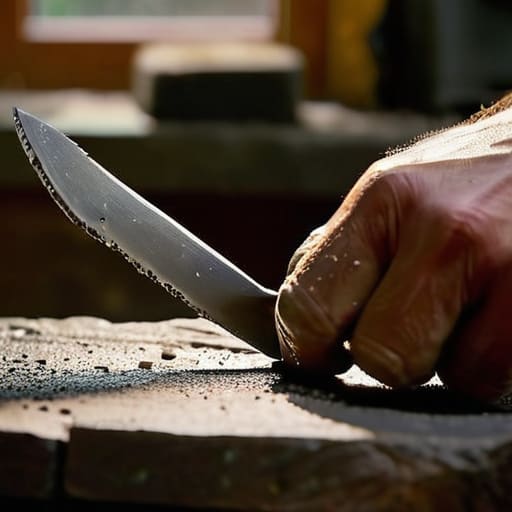
I remember sitting on my floor in a tiny apartment in Portland, feeling completely overwhelmed by a pile of dull tools and a cluttered mind. I realized then that the way we approach a task—even something as technical as sharpening—is a reflection of how we approach our lives. When you’re working through your whetstone grit progression, it’s tempting to rush straight to the finest stone to get that mirror finish. But there is a profound lesson in patience here. Moving too quickly from a coarse stone to a fine one is like trying to run a marathon before you’ve learned to walk; you’ll end up frustrated and with a blade that lacks true integrity.
Instead, try to view each stage as a necessary transition. As you move through the grits, focus intently on maintaining your bevel angle consistency. It’s in this rhythmic, repetitive motion that I often find my “flow state.” If you find your mind wandering to your inbox or your to-do list, gently bring your attention back to the sensation of the stone against the steel. This isn’t just maintenance; it’s a mindful ritual that teaches us that progress is rarely a straight line, but a series of intentional, layered steps.
Mastering Bevel Angle Consistency for Mindful Precision
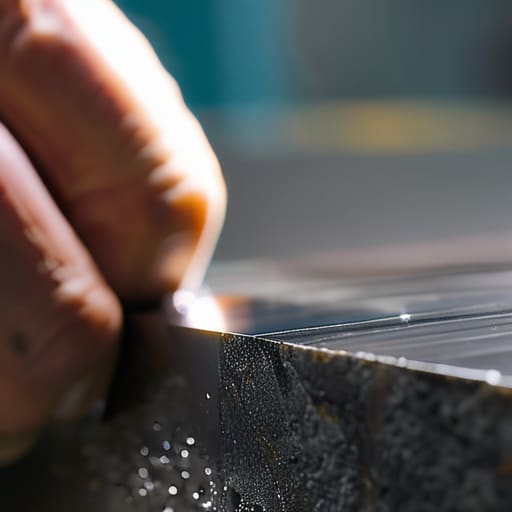
I remember one of my first woodworking projects back in Oregon; I was so focused on the speed of the task that I completely ignored the geometry of the tool. I ended up with a blade that just wouldn’t bite. That’s when I realized that bevel angle consistency isn’t just a technical requirement—it’s a lesson in patience. When you’re working the stone, your hand wants to wander, but true precision comes from that steady, rhythmic movement. If you find your hands feeling a bit unsteady, I always suggest leaning into a honing guide usage to provide that extra layer of structural support. It takes the guesswork out of the equation and allows you to focus entirely on the sensation of the metal meeting the stone.
Think of this stage as a moving meditation. As you refine the edge, you’ll eventually feel that subtle change in resistance, signaling that you’re successfully removing the burr. It’s a delicate moment where the tool transitions from a blunt instrument to a refined extension of your own intent. Don’t rush this; let the tool tell you when it’s ready.
Small Rituals for a Sharper Edge: My Top 5 Tips
- Listen to the stone, not just your eyes. As you work, there’s a subtle change in the sound of the metal sliding against the grit—a shift from a harsh scrape to a smooth, rhythmic hiss. Learning to hear that transition is like learning to hear your own breath during meditation; it tells you exactly when you’ve reached that perfect, polished state.
- Don’t rush the coarse grit phase. I know, when we’re excited to see results, we want to skip straight to the fine stones. But rushing the foundation is like trying to build a life on burnout. Spend the time needed to establish a true, flat bevel; it makes the rest of the journey so much more effortless.
- Keep your hands hydrated and your mind steady. It sounds a bit “wellness-obsessed,” I know, but sharpening requires a level of fine motor control that vanishes when you’re stressed or physically tense. If you feel your grip tightening or your focus splintering, step away for a quick stretch. A calm nervous system leads to a much more precise edge.
- Embrace the “burr” as a sign of progress. In my corporate days, we often viewed friction as a negative, but in sharpening, that tiny wire edge—the burr—is your best friend. It’s the physical proof that you are actually moving metal. Instead of fearing it, welcome it as a milestone that you’re on the right track.
- Clean your tools with intention. After you’ve finished, don’t just toss the chisel back in a drawer. Wipe it down with a bit of oil and take a second to appreciate the work you just did. Treating your tools with respect fosters a sense of stewardship that carries over into how you approach your work and your life.
Embracing the Rhythm of the Blade
Remember that sharpening is less about the finished edge and more about the presence you bring to the stone; when you stop rushing the process, the precision follows naturally.
Respect the progression of the grits as you would any journey of personal growth—you can’t skip the foundational stages if you want to reach a state of true, lasting excellence.
View the consistency of your bevel not as a rigid chore, but as a way to practice mindfulness, turning a repetitive task into a grounding ritual that centers your mind and hands.
The Rhythm of the Blade
“Sharpening a chisel is so much more than a maintenance task; it’s a quiet, rhythmic dialogue between your hands and the steel. When we stop rushing toward the finished project and instead lean into the slow, steady glide of the stone, we find that the true edge isn’t just on the metal—it’s in the clarity we find within ourselves.”
Sophia Reynolds
The Sharpness Within
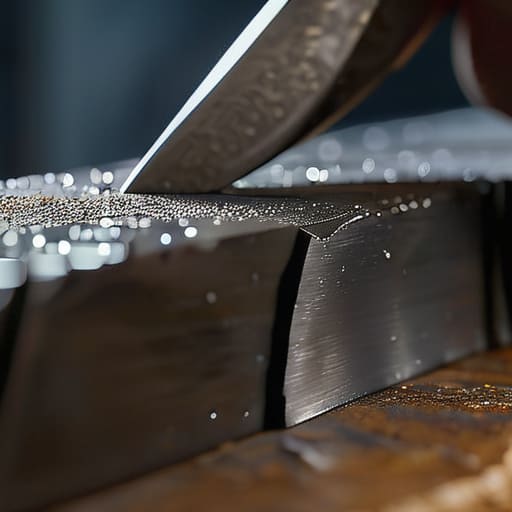
As we bring this process to a close, I hope you can feel the difference in your hands. We’ve journeyed through the essential rhythm of grit progression, learned the discipline of maintaining a consistent bevel angle, and discovered how a simple tool can become an extension of your own intention. Sharpening isn’t just about achieving a razor-edge; it’s about the patience and presence you bring to the stone. When you respect the steel and follow these steps with care, you aren’t just preparing a tool for work—you are cultivating a standard of excellence and mindfulness that will carry over into every other corner of your life.
I remember a time in my corporate days when I felt like a dull blade—functioning, but struggling to make a meaningful impact. It was only when I learned to slow down and “sharpen” my own focus that everything changed. As you move from your workbench back into the rush of your daily routine, remember that even the most profound transformations happen one small, deliberate stroke at a time. Don’t be afraid to pause and reset whenever life feels a bit too blunt or overwhelming. You have the power to refine your edges, find your flow, and approach every new challenge with a clear and sharpened perspective.
Frequently Asked Questions
How can I tell if I'm actually achieving a razor-sharp edge just by feeling the metal, or should I rely on a paper test?
Honestly, it’s a bit of both, but I love where your head is at. There is something so grounding about running your thumb—very gently, mind you—along the edge to feel that “bite.” It’s a tactile connection to your work. However, don’t let your senses trick you! I always recommend the paper test as a reality check. If it glides through without a single snag, you’ve truly found that sweet spot of precision.
Is it worth investing in expensive honing guides, or can I learn to find that perfect bevel angle by intuition alone?
Honestly, I’ve been in both camps. When I was first navigating the chaos of corporate life, I wanted every tool to be “perfect” to avoid failure. But with chisels, it’s different. While a honing guide offers a safety net for your focus, there is something deeply grounding about developing that intuitive “feel” for the bevel. My advice? Start with a guide to build your muscle memory, then slowly let go. Trust your hands; they’re learning to listen.
How often should I be performing these maintenance sessions to keep my tools ready without feeling like I'm spending all my time sharpening instead of creating?
I completely hear you—we want to be making art, not just prepping for it! I like to think of tool maintenance like a skincare routine; it’s more about consistency than intensity. Instead of massive sessions, try a “micro-maintenance” approach. A quick touch-up on a fine stone for five minutes before you start can prevent that dreaded edge degradation. Aim for a light hone every few uses, and you’ll stay in your creative flow longer.